

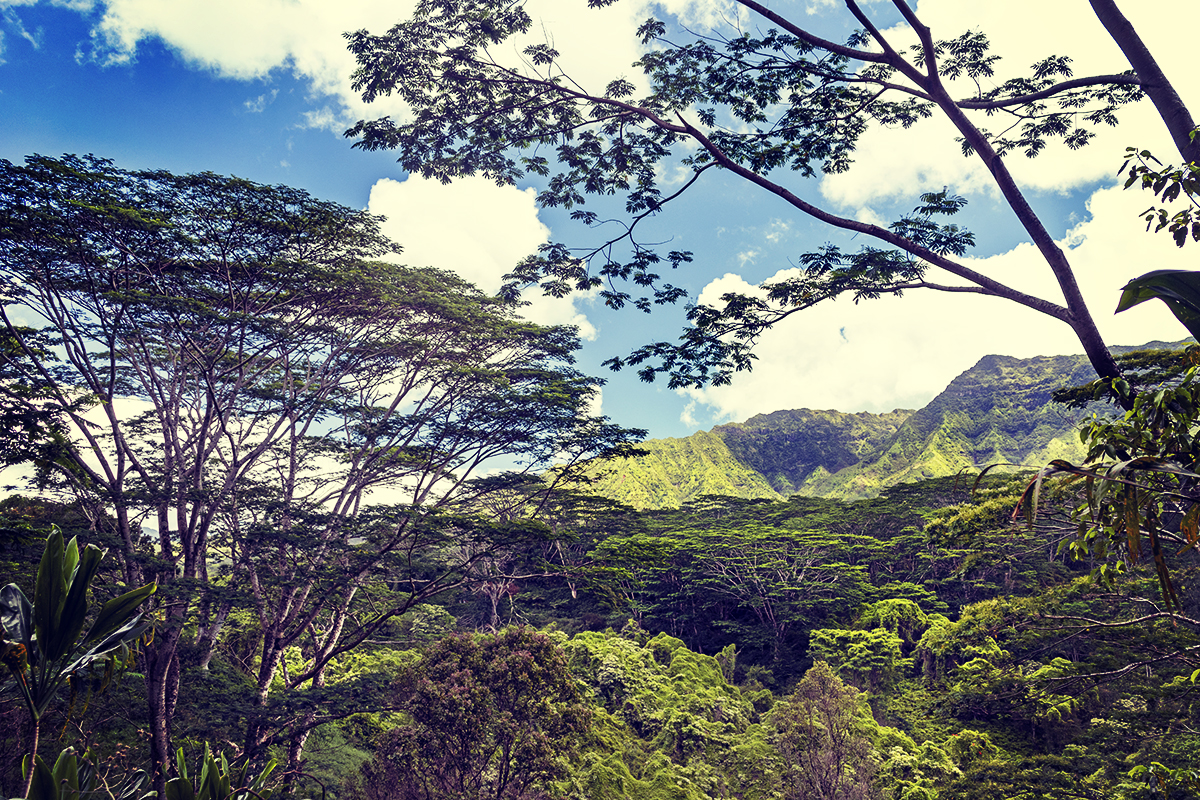
Acacia koa
Also known as Hawai’ian Koa, Acacia Koa is indigenous only to the Hawai’ian Islands. The Big Island is one of the last homes to surviving native Koa forests. Koa wood is prized for its beautiful grain pattern and flamed quilting which has a similar quality to the chatoyancy found in tiger’s eye gem stones. Popular for use in musical instruments, furniture and decorative wood work, Koa has become world renowned. Many of the native Koa forests have been clear cut for timber or to create pasture land. There is limited availability of mature trees at a time when demand has soared due to the beauty of the wood. All of my Koa is sustainably sourced from dead standing trees and vintage wood. Check out the shop for top grade luthier sets and professionally stabilized Koa knife blocks and handles.
|
Common Name |
Hawai’ian Koa |
|
Latin Name |
Acacia koa |
|
Color |
Color can be highly variable, but tends to be medium golden or reddish brown, similar to Mahogany. There are usually contrasting bands of color in the growth rings, and it is not uncommon to see boards with ribbon-like streaks of color. |
|
Grain |
The most common grain figures in koa are straight-grained wood, (grain pattern elements are aligned parallel to the long axis of the log) and wavy or curly grain pattern is highly prized for furniture, cabinet making, decorative woodwork and musical instruments. |
|
Density |
30-40 pounds per cubic foot (low density) |
|
Durability |
Susceptible to decay. |
|
Strength |
Similar to black walnut |
|
Workability |
Koa will finish to a high polish. It is considered easy to work and carve. Highly figured wood is very difficult to machine due to varying |


Comments (0)